Discover why Cypress, TX is attracting major industrial investors. From Elon Musk's projects to Prologis expansion, explore Northwest Houston's growth.
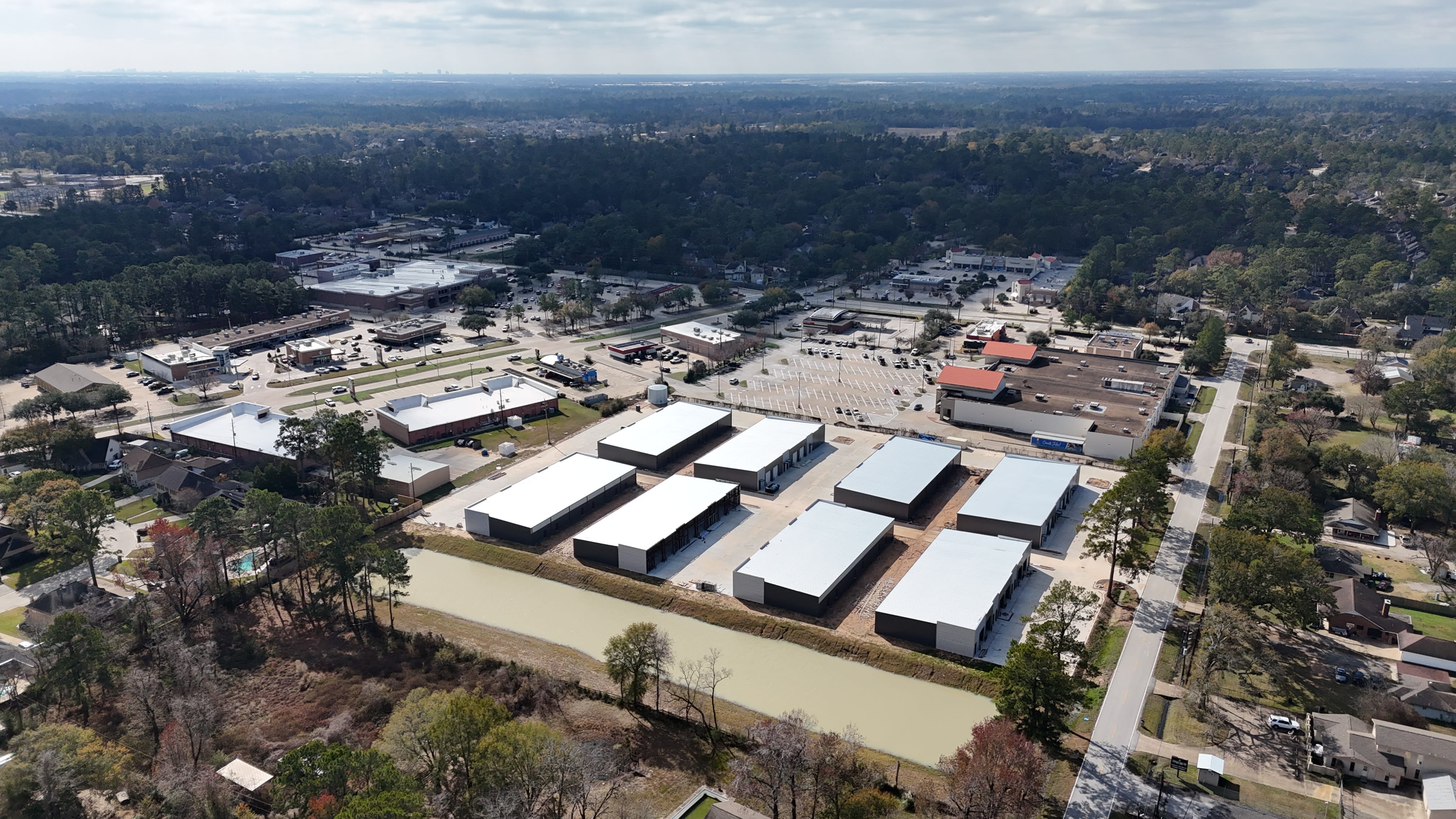
When high-net-worth investors look for the next major commercial real estate opportunity, they seek markets with explosive growth, strategic infrastructure, and undeniable momentum. In 2026, all signs point to Cypress, Texas—a rapidly expanding area in Northwest Houston that's capturing the attention of institutional investors, Fortune 500 companies, and visionary entrepreneurs alike.
The Cypress population has grown notably as master-planned communities near the Grand Parkway, including Bridgeland and Elyson, have added thousands of new homes to the western region. But the residential boom is only part of the story. The real opportunity lies in industrial flex space—a dynamic asset class that's becoming increasingly scarce in affluent, high-growth markets.
Houston's industrial market achieved net absorption of 3.7 million square feet in Q1 2026, extending the city's 16-year streak of positive absorption. This isn't a temporary surge—it's a sustained trajectory driven by fundamental economic forces.
The Northwest submarket recorded 993,953 square feet of positive absorption, with major tenant moves including SEG Manufacturing's 425,000 square foot lease at Northwest 99 Business Park. This robust activity demonstrates that Northwest Houston, and Cypress specifically, has evolved from a bedroom community into a legitimate industrial powerhouse.
Unlike traditional industrial corridors dominated by distribution centers and big-box warehouses, Cypress offers something increasingly rare: premium industrial flex space in proximity to affluent residential areas.
The average annual household income in Cypress reached $165,491 in 2024, with median income standing at $131,562. This affluence creates demand for specialized industrial uses—from luxury car storage and e-commerce fulfillment to light manufacturing and medical services—that require both functionality and prestige.
The Houston luxury industrial condo market is positioned for continued appreciation over the next 24 months, supported by limited infill supply, strong owner-user demand, and rising replacement costs.
When Elon Musk makes a move, savvy investors pay attention. His companies' activities in the greater Houston region signal a fundamental shift in Northwest Houston's economic landscape.
After years of research and discussion about flood mitigation solutions, Elon Musk's Boring Company is pursuing a piece of the project in partnership with Houston-area representatives. Musk is pushing forward with a $760 million plan to build twin underground tunnels beneath Houston, involving two 12-foot-diameter tunnels to divert stormwater from federal reservoirs to the Gulf of Mexico.
While the tunnel project remains in development, its mere presence in the region sends powerful signals about infrastructure investment and long-term viability.
Tesla's Robotaxi service launched in Northwest Houston, operating along Fairbanks North Houston to FM 1960, between Highway 290 and Highway 249—placing the operating zone in the Jersey Village and Willowbrook area. This positions Cypress at the frontier of autonomous transportation technology, which will fundamentally reshape logistics and distribution patterns.
Musk's Space Exploration Technologies Corp. is considering a massive Terafab chipmaking facility in nearby Grimes County, with an initial capital investment of $55 billion and estimated total capital investment of $119 billion if additional phases are constructed.
The proximity of such transformative projects to Cypress creates a halo effect—attracting suppliers, service providers, and skilled workers who will need industrial space in the area.
When the world's largest industrial REIT makes major commitments to an area, it validates the market thesis for smaller investors.
Prologis is planning to add up to five million square feet of speculative and build-to-suit industrial space at its 350-acre Legacy Point property in Cypress. This represents one of the most significant industrial developments in the Northwest Houston corridor.
Institutional capital doesn't chase trends—it follows fundamentals. Prologis's massive commitment to Cypress reflects:
Traditional warehouse space serves a purpose, but industrial flex space offers investors a differentiated opportunity with multiple competitive advantages.
Flex space is a type of adaptable commercial real estate that combines office, retail, and industrial/warehouse functions, giving tenants a private, self-contained space with roll-up door access, a dedicated work area, and room for tools, equipment, inventory, or fabrication.
Flex space commands the highest asking rate at $0.98 per square foot, followed by manufacturing at $0.91 per square foot, while warehouse/distribution space averages $0.83 per square foot.
Despite premium pricing, flex tenants take an average of 9.5 months to secure, compared to the overall market average of 7.1 months, largely due to the unique composition of flex spaces which typically contain 30-50% more office space than standard industrial space. This longer lease-up period is offset by higher-quality tenants and reduced turnover.
Buyers of luxury industrial condos are typically cash or low-leverage purchasers who are insensitive to cap rates and motivated by utility, privacy, and asset control, insulating pricing from traditional industrial leasing cycles.
This creates a fundamentally different investment dynamic—one based on owner-occupancy rather than speculative leasing, which tends to be more stable through economic cycles.
The momentum in Cypress isn't slowing—it's accelerating.
Healthcare leads development with approximately $236 million in Memorial Hermann and Houston Methodist expansions, with Costco's $64.5 million warehouse and Venterra's $50 million apartments bringing jobs and convenience.
Over 180 projects have been registered for construction within the Cypress area in the past six months, with 183 new projects registered since March 2025.
Master-planned communities like Bridgeland, Elyson, and Towne Lake continue adding thousands of residents annually. This residential growth drives immediate demand for:
Mobility and livability improvements include the $17.6 million Cypress North Houston Road project, plus new school additions and neighborhood parks. These infrastructure investments increase accessibility and enhance the overall investment environment.
For sophisticated investors, Cypress offers multiple entry points depending on risk tolerance and investment horizon.
Working with experienced developers to create custom industrial flex facilities allows investors to:
For buyers in the 77024 trade area and surrounding regions, developers should acquire early in project lifecycle, favor flexible layouts with higher clear heights, and prioritize security, access, and HOA quality.
Industrial condo ownership provides:
Houston's economic diversity and strong industrial base continue to fuel demand for adaptable spaces, with industrial warehouses being redesigned into adaptive flex spaces capable of housing everything from logistics hubs to light manufacturing, tech startups, and collaborative office zones.
Acquiring older industrial properties and converting them to modern flex space can generate substantial returns through:
Timing is everything in commercial real estate. Several converging factors make 2026 an optimal entry point for Cypress industrial flex investment.
Overall vacancy in Houston's industrial market reached 7.4%, with older properties facing hurdles as tenants shift to newer space, while small-bay construction remains limited, supporting tighter conditions in that segment.
This creates a "barbell" market where Class-A, modern flex space commands premium pricing while older, commodity warehouse space struggles. Investors who position in the premium segment capture the growth.
Rising construction costs for steel, concrete, and labor provide a price floor, as replacement cost for comparable product continues to move upward.
This means existing inventory becomes more valuable over time, and new development pencils at higher basis, protecting early investors from downside risk.
Houston's investment market continues to excel, with lower interest rates and declining cap rates. As financing costs normalize after the 2023-2024 rate spike, transaction velocity will increase and cap rates will compress, benefiting existing owners.
Every investment carries risk. Sophisticated investors understand and mitigate potential challenges.
Development remains elevated with 29 million square feet underway, heavily concentrated in speculative, large-format logistics properties, with the large volume of unleased space expected to increase vacancy through 2026.
Mitigation: Focus on differentiated product (flex vs. commodity warehouse), owner-user buildings, and infill locations near residential areas rather than outlying big-box development.
Houston's economy remains tied to energy sector performance, which can be cyclical.
Mitigation: Strong economic fundamentals including a thriving job market, substantial corporate investments, and Houston's diverse and growing population create constant demand for housing and commercial spaces. Diversification beyond oil and gas reduces traditional cyclicality.
Some of the Cypress thesis depends on planned infrastructure improvements that could be delayed or modified.
Mitigation: Focus on properties with current infrastructure advantages rather than speculating on future improvements. Grand Parkway access and proximity to established master-planned communities provide immediate value regardless of future projects.
Location within Houston matters enormously. Cypress and Northwest Houston offer distinct advantages over other submarkets.
East Houston offers port proximity but lacks workforce availability and suffers from industrial sprawl without residential amenities. Cypress combines industrial viability with quality of life.
Southwest Houston has seen significant development but is becoming saturated. Northwest Houston's status as an industrial expansion hub is reinforced by continued demand for Class-A industrial product and rapid lease-up of earlier phases.
North Houston offers airport proximity but limited land availability for new development. North Houston's urban location provides an employment base for companies needing both large industrial spaces and workforce, but unlike options further from Houston's core, the ability to supply both benefits the entire district. Cypress offers more greenfield opportunities with similar transportation access.
Looking ahead, multiple catalysts will continue driving Cypress industrial flex demand.
Census data shows more residents are planting roots in Cypress as people from other regions of Harris County and Texas move to rapidly-developing neighborhoods near the Grand Parkway.
This population influx is not speculative—it's happening now and will continue as master-planned communities build out over the next 5-10 years.
The shift to online retail continues accelerating, requiring last-mile distribution infrastructure closer to affluent consumer bases. Cypress's demographics make it ideal for premium e-commerce fulfillment.
Federal policy and supply chain considerations are driving manufacturing back to the United States. Texas, and Houston specifically, benefits from business-friendly policies, available land, and skilled workforce.
The deployment of autonomous vehicles, advanced logistics software, and smart building technology favors newer, adaptable facilities over legacy industrial stock—exactly what Cypress offers.
For high-net-worth individuals considering Cypress industrial flex investment, a systematic approach maximizes returns and minimizes risk.
The convergence of population growth, institutional capital deployment, transformative infrastructure projects, and fundamental supply-demand dynamics makes Cypress, Texas one of the most compelling industrial flex investment opportunities in the United States today.
Cypress is in a major growth phase, with new "coming soon" signs and projects constantly being registered with the state. For investors who recognize this inflection point, the opportunity to capture value in Northwest Houston's evolution from residential suburb to integrated industrial-residential corridor is immediate and significant.
The question isn't whether Cypress will continue growing—the master-planned communities, corporate relocations, and infrastructure investments make that trajectory clear. The question is whether you'll position your portfolio to capture that growth before the market fully prices in the opportunity.
Ready to explore industrial flex investment opportunities in Cypress, TX? SMART Investments specializes in commercial real estate development throughout Houston, with deep expertise in Northwest Houston's rapidly expanding industrial corridor. Our team provides high-net-worth investors with exclusive access to premium opportunities before they reach the broader market.
Contact us today to schedule a confidential consultation and discover how Cypress industrial flex space can enhance your investment portfolio.