Discover why small bay industrial flex space is outperforming big-box warehouses with lower vacancies, higher rent growth, and diversified tenant demand in 2026.
While headlines chase mega-warehouse deals and billion-dollar logistics hubs, a quieter revolution has been reshaping the industrial real estate landscape. Small bay industrial — sometimes called flex space, shallow bay, or micro-flex — has emerged as one of the most compelling investment opportunities in commercial real estate today. And the numbers back it up: vacancy rates half those of big-box warehouses, rents climbing over 40% since 2020, and a construction pipeline so thin it barely registers on the national radar.
If you've been watching the industrial sector and wondering where the real opportunity lies, it's time to look smaller.
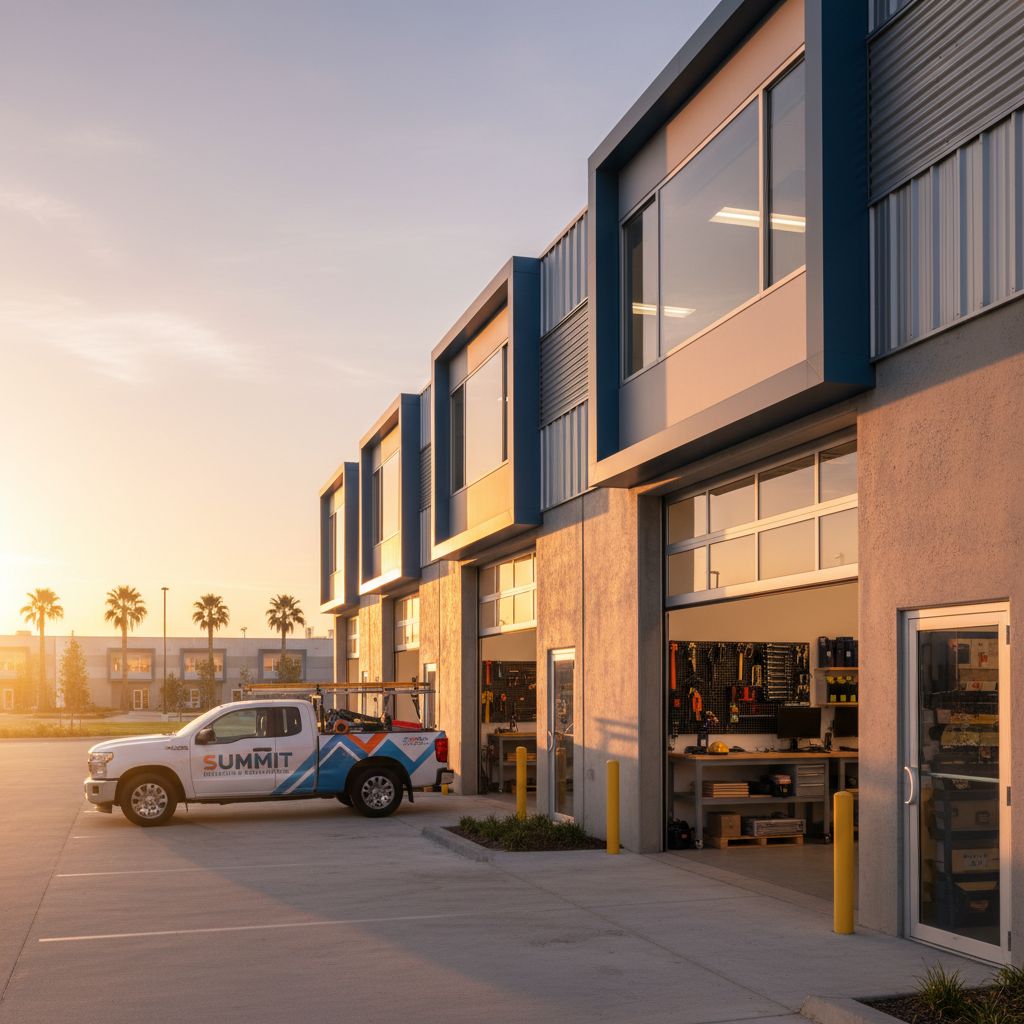
Small bay industrial refers to commercial properties typically under 50,000 square feet that are subdivided into individual units ranging from 1,000 to 10,000 square feet each. Think of a well-designed business park where each unit features a professional office or showroom in the front and a functional warehouse in the back — complete with high ceilings, roll-up doors, and loading access.
These aren't the sprawling distribution centers you see along interstate corridors. They're the workhorses of local economies: the places where contractors store equipment, e-commerce sellers pack orders, custom fabricators build products, and service businesses run day-to-day operations.
The "flex" in flex space is the key differentiator. Each unit can be configured for a blend of office, warehouse, light manufacturing, or retail use — giving tenants the ability to pay for one location instead of maintaining separate facilities for different functions. That versatility is precisely what's driving unprecedented demand.
The performance gap between small bay industrial and its larger counterpart has widened dramatically, and the data heading into 2026 paints a striking picture.
Vacancy rates for small bay properties under 50,000 square feet have dropped to just 3.4%, according to recent industry data. For the smallest units — those under 10,000 square feet — vacancies sit at an even tighter 3.5% nationally, with asking rents reaching $18 to $28 per square foot in competitive markets.
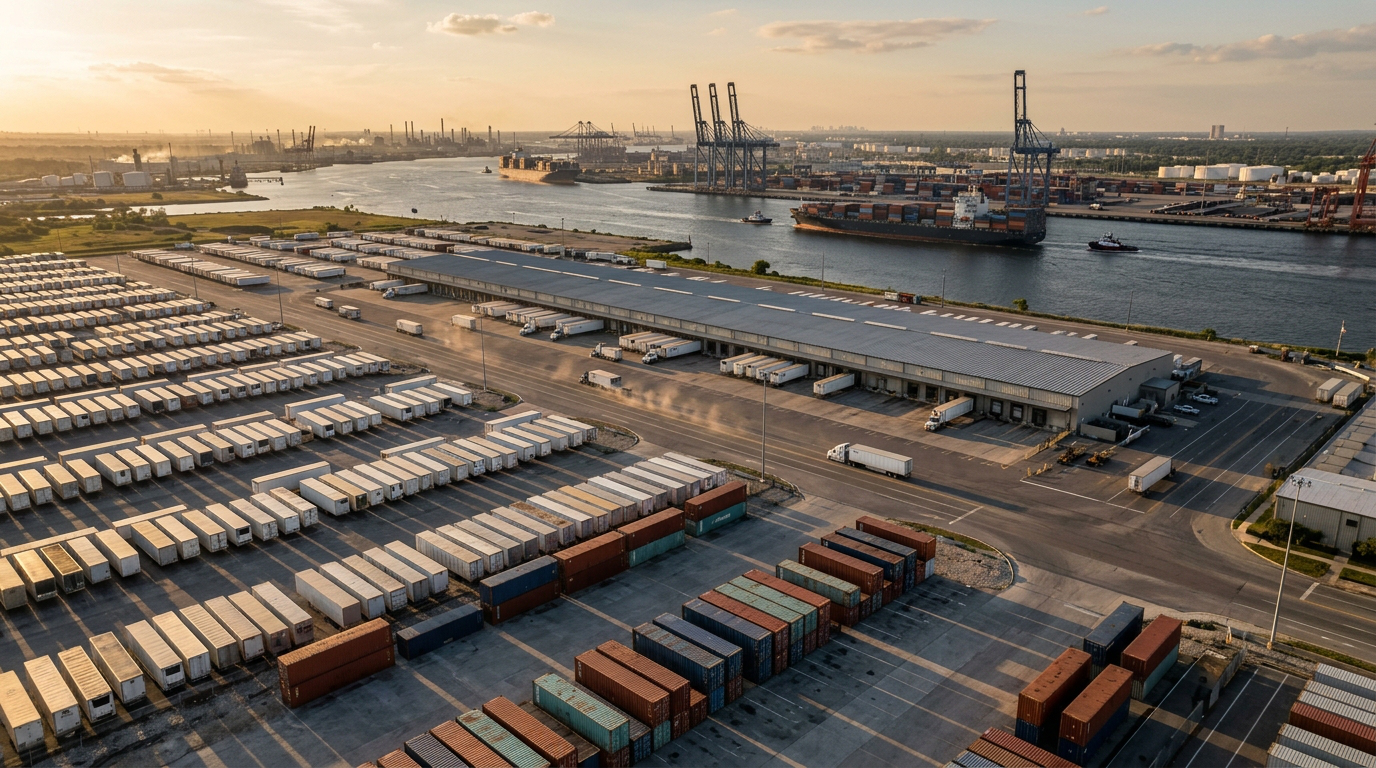
Compare that to big-box industrial facilities, where vacancies have surged to nearly 11% as the market digests years of speculative overbuilding.
The takeaway: Small bay properties are operating at near-full occupancy while their larger cousins struggle to fill space. That's not a temporary blip — it's a structural advantage built into the asset class.
Rents for sub-100,000-square-foot industrial space in core submarkets grew 5% to 8% year-over-year through late 2025, while larger big-box spaces saw flat or declining rents. Since 2020, small bay rents have surged over 40% — a pace of appreciation that few other commercial real estate sectors can match.
This rent growth isn't speculative. It's driven by genuine supply-demand imbalance: tenants need these spaces, very few new ones are being built, and existing inventory is essentially spoken for.
In Q2 2025 alone, transactions for small bay properties in the $5 million to $25 million range totaled nearly $5.9 billion. Properties under 150,000 square feet now account for 62% of all industrial sales volume, highlighting growing institutional and private market interest in the segment.
Average sale prices have climbed 55% since 2020 to $104 per square foot, and private buyers now represent nearly 50% of all industrial acquisition volume — far exceeding their 10-year average and signaling increased conviction in smaller, operationally intensive assets.
One of the most powerful tailwinds for small bay industrial is the severe lack of new supply. Nationally, only about 23 million square feet of small bay assets are under construction — less than 0.3% of total industrial stock.
Why so little? The economics of development favor large-format warehouses. Big-box construction is simpler, faster, and easier to finance. Building a multi-tenant small bay property requires more complex site planning, more tenant improvements, more management infrastructure, and more leasing effort per square foot. Most institutional developers have historically avoided the segment entirely.
The result is a supply gap that has been building for over a decade. While big-box construction volume fell by nearly two-thirds since late 2022 due to oversupply, the small bay pipeline was never robust to begin with. And with construction costs and interest rates still elevated, there's little incentive for developers to suddenly pivot to smaller formats.
For investors, this constrained supply is the moat. When you own well-located small bay assets in a market with virtually no new competition coming online, you have extraordinary pricing power and occupancy stability.
The tenant base for small bay industrial is remarkably diverse — and that diversity is one of the asset class's greatest strengths. Unlike a mega-warehouse leased to a single logistics company, a well-managed small bay property might host 20 to 50 tenants across completely different industries.
Contractors and Service Trades: Plumbers, electricians, HVAC technicians, roofers, general contractors, landscapers, and restoration specialists. These businesses need workshop and equipment storage space with easy road access, and they form the backbone of small bay occupancy in virtually every U.S. market.
E-Commerce Operators: Specialty sellers managing their own fulfillment, Etsy entrepreneurs scaling beyond the garage, and direct-to-consumer brands handling inventory and shipping. As micro-fulfillment continues to grow, so does demand for 1,500 to 5,000 square foot warehouse units.
Creative and Specialty Businesses: Custom auto builders, furniture makers, craft brewers, CrossFit gyms, martial arts studios, and indoor sports training facilities. These users need the high ceilings and flexible layouts that flex space provides.
Startups and Early-Stage Companies: Businesses testing product-market fit, building initial inventory, or establishing operations often start in micro-flex units before graduating to larger spaces. They need 1,500 to 3,000 square feet of combined office, storage, and light production space — exactly what small bay delivers.
Here's what makes this tenant mix so powerful from an investment perspective: these businesses serve local demand. A plumber doesn't relocate operations to another state because of a trade policy shift. A CrossFit gym doesn't offshore its facility. An e-commerce seller packing orders needs to be near their customer base.
This local, non-discretionary nature of the tenant base provides a natural hedge against the macroeconomic volatility that can whipsaw big-box logistics demand. When a single Amazon lease doesn't renew, a 1-million-square-foot warehouse sits empty. When one small bay tenant leaves, the impact on overall property income is minimal — and the unit typically re-leases within weeks given the tight market.
For investors weighing where to deploy capital in the industrial sector, the comparison is increasingly lopsided:
| Metric | Small Bay Industrial | Big-Box Warehouse |
|---|---|---|
| Vacancy Rate | 3.4% | ~11% |
| Rent Growth (YoY) | 5–8% | Flat to declining |
| Rent Growth Since 2020 | 40%+ | Varies widely |
| New Supply (% of stock) | <0.3% | Significantly higher |
| Tenant Concentration Risk | Low (20-50+ tenants) | High (1-3 tenants) |
| Lease Terms | 1–5 years | 5–15 years |
| Share of Sales Volume | 62% of transactions | 38% of transactions |
The shorter lease terms in small bay might seem like a disadvantage at first glance, but in a market with 3.4% vacancy and 5-8% annual rent growth, frequent lease rollovers are actually an advantage — they let owners capture market-rate rents faster than landlords locked into long-term leases signed at lower rates.
Not all markets are created equal. The strongest small bay fundamentals are clustering in metros with robust population growth, business formation, and service-sector expansion:
These markets share common characteristics: they're growing, they're business-friendly, and their existing small bay stock was already undersupplied before the current demand surge.
The NAIOP Industrial Space Demand Forecast projects that net absorption will reach 345.9 million square feet for the full year of 2026, with Q1 2026 leasing already clocking in at 226.7 million square feet — the strongest first quarter since 2022 and a 20.8% increase year-over-year.
Within that broader recovery, small bay properties sit in the driver's seat. The fundamentals that have powered the segment's outperformance — supply scarcity, tenant diversity, local demand resilience, and management-driven value creation — aren't going away. If anything, they're intensifying as more capital discovers what experienced operators have known for years.
BKM Capital Partners noted in their Q1 2026 white paper that the small and mid-bay segment continues to stand apart from the broader industrial market, with operating fundamentals that reward hands-on, asset-level management in ways that passive big-box ownership simply cannot match.
For investors willing to embrace the operational intensity that small bay requires — active leasing, tenant management, property maintenance — the rewards are substantial: stable cash flow, consistent rent growth, and a competitive moat built on structural supply constraints.
If you're considering small bay industrial as part of your real estate portfolio, here are the critical factors to evaluate:
Location is paramount. Target properties near population centers with strong road access, visibility, and proximity to residential growth corridors. Your tenants are local businesses — they need to be near their customers.
Tenant mix matters. The most resilient small bay properties serve a diverse cross-section of industries. Avoid over-concentration in any single tenant type.
Management is the value driver. Unlike a triple-net big-box lease, small bay properties require active management. That's where the returns come from — but it also means partnering with experienced operators is essential.
Underwrite the supply pipeline. Verify that limited new construction is planned in your target submarket. The supply constraint is the thesis — make sure it holds in your specific market.
Think portfolio, not property. The power of small bay investing scales with diversification. A portfolio of well-located assets across growth markets amplifies the built-in tenant diversification that makes the asset class so resilient.
Small bay industrial isn't just an emerging trend — it's a structural shift in how the market values flexible, well-located, multi-tenant industrial assets. With vacancy rates at historic lows, rents climbing at a pace that dwarfs the broader market, and a supply pipeline that's essentially empty, the fundamentals speak for themselves.
The question isn't whether small bay industrial deserves a place in your portfolio. It's whether you can afford not to have it there.
Ready to explore small bay industrial opportunities?Contact SMART Investments today to learn how we're positioning our portfolio to capture this generational opportunity in industrial real estate.
Sources: NAIOP Spring 2026, BKM Capital Partners Q1 2026 White Paper, Basis Industrial, CRE Daily, CBRE Shallow Bay Report, Matthews Real Estate
Twitter/X: Small bay industrial vacancies: 3.4%. Big-box warehouses: 11%. Rents up 40%+ since 2020 with almost zero new supply. The smartest money in CRE is going smaller. Here's why. 🏭
LinkedIn: The industrial real estate market is splitting in two — and the smaller side is winning.
Small bay industrial properties (under 50,000 SF, subdivided into flex units) are posting vacancy rates of just 3.4% compared to nearly 11% for big-box warehouses. Rents have surged 40%+ since 2020, and with less than 0.3% of total stock under construction, the supply-demand imbalance isn't correcting anytime soon.
What's driving it? A diverse tenant base of contractors, e-commerce operators, and local service businesses that provide natural hedging against economic cycles. For investors seeking stable cash flow with genuine upside, small bay flex space deserves serious attention in 2026.
Instagram: Think bigger by going smaller. 💡 Small bay industrial — those versatile flex spaces where contractors store gear, e-commerce brands pack orders, and startups build their first products — is quietly crushing it in 2026. We're talking 3.4% vacancy rates, 40%+ rent growth since 2020, and barely any new supply on the horizon. It's the kind of opportunity that hides in plain sight while everyone chases the headlines. The smartest investors know: sometimes the best move is the one nobody's watching. #RealEstateInvesting #IndustrialRealEstate #FlexSpace #SmallBayIndustrial #CRE #SMARTInvestments
Subject: The industrial asset class nobody's talking about (but everyone's buying)
While big-box warehouses battle rising vacancies, one corner of the industrial market is quietly posting 3.4% vacancy rates and 40%+ rent growth. Small bay industrial flex space is the opportunity hiding in plain sight — and in our latest deep dive, we break down exactly why the smartest investors are going smaller in 2026. [Read the full analysis →]