←Blog
/
The Office Condo Built-to-Rent Play: Why Northwest Houston Is Quietly Becoming the Smartest Small-Bay Bet in Texas
Why built-to-rent office condos in Northwest Houston offer 12%+ yields-on-cost, tax advantages, and pre-compression cap rates for HNW investors and family offices.
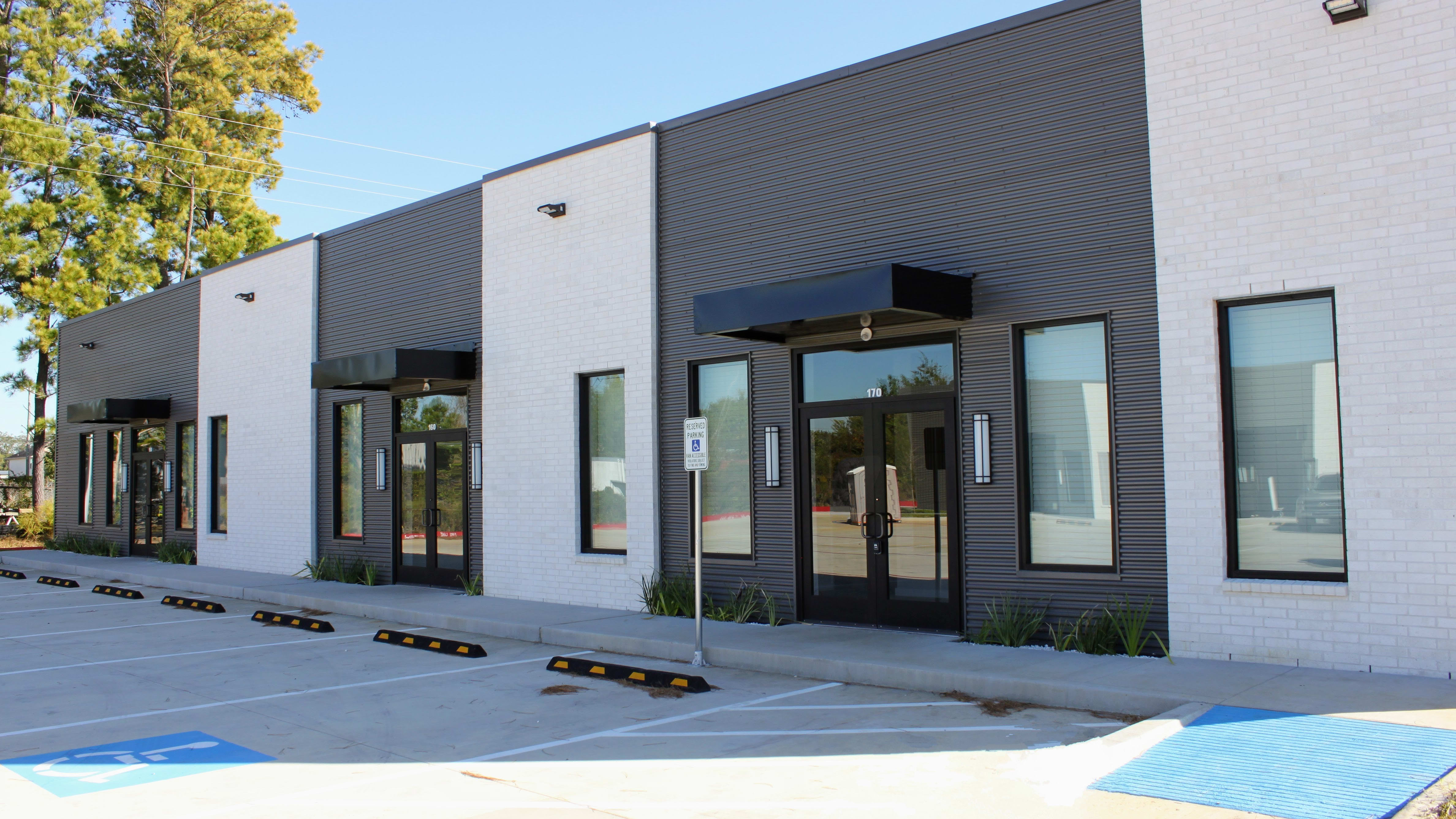
For the better part of two decades, the institutional capital stack has treated "office" as one monolithic asset class. Trophy towers, suburban mid-rises, garden-style flex — all lumped together, all painted with the same post-COVID brush. That oversimplification has created one of the most asymmetric opportunities in the current commercial real estate cycle: the built-to-rent office condominium, particularly in the industrial-adjacent submarkets of Northwest Houston.
At SMART Investments, we've spent the last several quarters underwriting this niche from every angle — tenant interviews, comp sheets, construction takeoffs, exit modeling. The pattern is clear, and it's not what the headlines suggest. While CBD vacancy rates dominate the financial press, the small-bay office condo product in submarkets like Cypress, Tomball, Jersey Village, and Northwest Crossing is running at sub-5% vacancy, posting double-digit rent growth, and trading at cap rates that institutional buyers haven't yet fully discovered.
This article is for the family offices, high-net-worth principals, and middle-market PE sponsors who already know the office headline number is a lazy proxy. Let's get into what's actually happening on the ground.
The national office vacancy story is real — but it's almost entirely a story about Class A urban core product over 100,000 square feet per tenant. That's not the asset class we're discussing.
The built-to-rent office condo is a fundamentally different animal:
When an HVAC contractor with 12 employees and a $4 million revenue base needs space, they aren't comparing it to One Allen Center. They're comparing it to a strip-center suite with no privacy, no signage, and a 60-month TI burnoff. The office condo wins almost every time — and the rent reflects it.
Northwest Houston is the bullseye for this strategy for four reasons that compound on each other:
The Northwest submarket has absorbed more than 35 million square feet of new industrial product since 2020. That's not just warehouses — it's an entire ecosystem of small operators who service those warehouses: third-party logistics, freight brokers, equipment lessors, MEP contractors, light manufacturers, and the professional services firms (legal, accounting, payroll) that orbit them.
These tenants need office space within 10 minutes of their warehouse footprint. They will not commute to the Galleria. They will not lease a suite inside a Class B office tower with a shared lobby and visitor parking. They want a 2,400 SF condo with their logo on the door and a roll-up bay door in the back.
Harris and Montgomery County's northwest quadrants are absorbing population at rates that materially exceed the Houston MSA average. The U.S. Census Bureau and Greater Houston Partnership data consistently show that ZIP codes along the Highway 290, Beltway 8 Northwest, and Highway 249 corridors are among the fastest-growing in the state. New rooftops drive new small businesses, and new small businesses drive office condo demand on a roughly 18-month lag.
Class A high-rise office construction is currently penciling at $400 to $600+ per square foot in Houston's core submarkets. Built-to-rent office condo product — tilt-wall shell, demised units, basic finish-out — is being delivered for $295 to $325 per square foot all-in in Northwest Houston, including land. That cost basis is the entire investment thesis. When your delivered basis is 33% below the comparable product downtown, you can afford to lease at a 20% discount to that product and still clear an unlevered yield north of 8%.
The check sizes in this asset class — typically $8M to $35M per project — are too small for the institutional office buyers and too operationally intensive for passive private capital. That gap is exactly where family offices and middle-market sponsors win. The competition is fragmented: local developers, owner-users, and 1031 buyers. None of them are running the asset like a professional operator.
The traditional office condo product has historically been built to sell — developer carves the building into individual units, sells them to owner-occupiers, and exits at vertical completion. That model has merit but it's transactional, not investable. Once the units are sold, the developer is gone.
The built-to-rent thesis flips the model:
| Variable | Built-to-Sell | Built-to-Rent |
|---|---|---|
| Hold period | 12–24 months | 7–10+ years |
| Buyer profile | Owner-occupiers, 1031 buyers | Institutional, family office |
| Exit cap rate | N/A (unit sales) | 6.5% – 7.25% (current Houston pricing) |
| Operating intensity | High at sellout, then zero | Moderate, ongoing |
| Tax treatment | Ordinary income / dealer status risk | Capital gains, 1031 eligible, cost seg eligible |
| Tenant base | Individual owners | Diversified rent roll, professional management |
The built-to-rent model captures the construction margin and the stabilized yield and the eventual cap-rate compression as the asset class becomes more institutionally recognized. That's three sources of return in one deal.
We pulled rent rolls from a dozen stabilized Northwest Houston office condo projects to characterize tenant mix. The breakdown is illuminating:
Two things stand out. First, this tenant base is recession-resilient in a way trophy office isn't — these are demand-of-the-economy businesses, not discretionary corporate footprints. Second, average tenant size of roughly 2,100 square feet means a 30,000 SF project supports 12–15 tenants, which translates into meaningful diversification within a single asset.
"The spread between development yield and stabilized cap rate in this product is wider than anything we're seeing in industrial right now. Industrial has compressed; this hasn't — yet." — A common refrain from the brokers actively working this space in 2026.
The investment merits of the built-to-rent office condo stand on their own. The tax wrapper makes them irresistible for the right capital.
Cost segregation on this product type is exceptional. Metal-structure office condos typically carry 28–35% of total basis in 5- and 15-year property, accelerating depreciation meaningfully in the early hold years. Most of it usable in the first 24 months under current bonus depreciation schedules.
1031 exchange compatibility is straightforward. The asset is held for investment, leased to multiple tenants on standard NNN-style leases, and presents none of the dealer-status risk that plagues built-to-sell strategies.
Opportunity Zone overlay exists for select Northwest Houston tracts. Not every site qualifies, but where they do, the combination of OZ deferral, basis step-up at 10 years, and the underlying deal economics produces tax-adjusted IRRs that are difficult to replicate in any other asset class.
For a family office writing $5M–$15M equity checks, this is one of the cleanest tax-efficient yield structures available in commercial real estate today.
We'd be doing readers a disservice if we didn't name the risks honestly:
There are three reasonable entry points depending on capital base and operational appetite:
Acquire stabilized. Buy an existing leased-up office condo project at a 6.75%–7.25% cap. You forgo development upside but capture immediate cash flow, full tax benefits, and a defensible cash-on-cash from day one. Best fit for family offices prioritizing yield.
Co-invest in development. Partner with an experienced sponsor on a build-to-rent project at the LP level. You capture the development margin, but you take 24–30 months of construction and lease-up risk. Returns are materially higher; so is the work.
Aggregate a portfolio. The strategy most institutional buyers will eventually pursue: assemble five to ten projects across Northwest Houston (and eventually other Texas markets — DFW and San Antonio are 18 months behind Houston on this curve) into a single roll-up vehicle that can attract institutional debt and an institutional exit. This is the play with the largest absolute dollar return, and it's the play most current sponsors aren't capable of executing.
The built-to-rent office condo opportunity in Northwest Houston is one of those rare moments where structural mispricing, demographic tailwinds, construction cost arbitrage, and limited institutional competition all converge on the same product type at the same time. Windows like this don't stay open. We've seen this exact dynamic play out in single-tenant industrial outdoor storage (IOS) over 2020–2024 — a category that was institutionally invisible, then suddenly wasn't, with cap rates compressing 200+ bps in 36 months once the institutional buyers showed up.
Office condos in Northwest Houston are in inning two of a similar story.
If you're a family office, HNW principal, or private equity sponsor evaluating allocation to this thesis, we'd welcome a conversation. SMART Investments actively underwrites, develops, and operates office condo product across Northwest Houston, and we maintain a curated pipeline of stabilized acquisitions and ground-up co-invest opportunities for qualified capital partners. Reach out to schedule a discovery call — we'll walk you through live deals, comparable transactions, and the underwriting templates we use internally.
The cap-rate compression is coming. The question is whether you're positioned ahead of it or buying from someone who was.